The Question Behind the Question
How One Child’s Diagnosis Exposed a Web of Silence, Science, and Shifting Ethics in Modern medical Care

In the busy pediatric ward, a young child lied listless—prolonged fever, chronic diarrhea , chronic ear discharge, skin infections and growth faltering despite every effort at nutrition. To a Pediatric resident, this presentation triggers a familiar diagnostic hum: infections, malabsorption, immunodeficiency. The workup proceeds methodically. Then the HIV test returns positive. What follows is not just a medical diagnosis, but a quiet unraveling of lives…!
This scenario is hauntingly familiar. Recently , Dr. Nikhil Agrawal shared a near-identical experience from his pediatrics internship on X. A child with prolonged fever and diarrhea tested positive for HIV. The accompanying “parents” were tested: mother positive, the man presented as father negative. Shaken, he returned alone with urgent, probing questions: “Does HIV spread from kissing?” No, casual contact does not transmit the virus. Then, the second question: “What about sex?” Yes—sexual contact is a primary route. The truth emerged: the man was the child’s uncle (chacha). The mother had been living with him, while the biological father lived with the uncle’s wife (chachi). Both biological parents had known their status but chose not to disclose it to their new partners. One pediatric case had quietly become a contact-tracing web spanning four adults and two households.
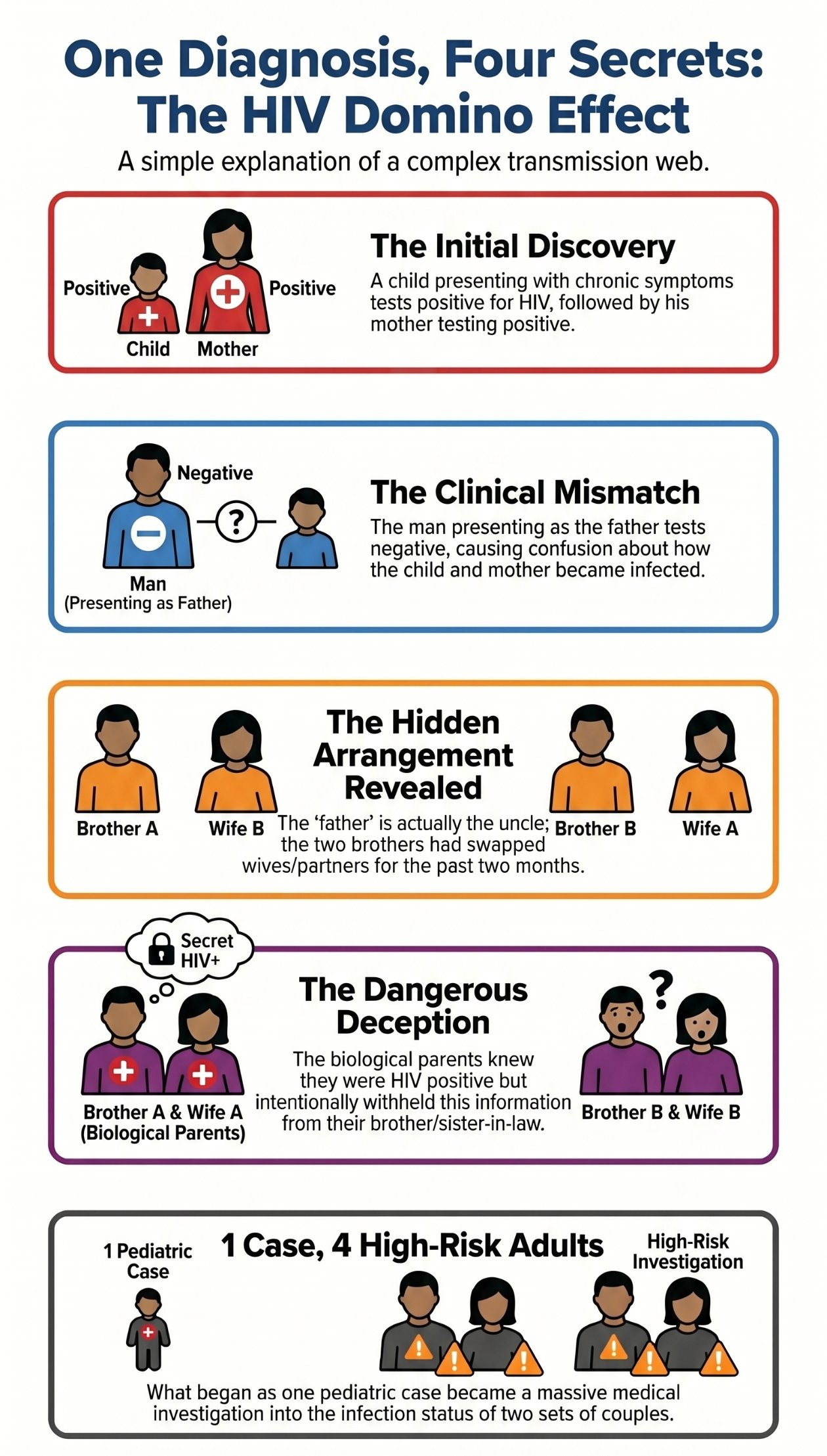
I encountered a strikingly similar situation during my own residency. The details differed slightly, but the emotional and ethical architecture was identical. That single diagnosis dismantled the comforting illusion that medicine deals only in closed biological systems.
It revealed instead a dense network of human relationships—love, betrayal, stigma, silence—where a virus moves along invisible fault lines of trust. What followed was a masterclass in the messy intersection of cutting-edge science, cultural realities, legal safeguards, and timeless ethical tensions.
The Science That Changed Everything: Treatment as Prevention (TasP) and U=U
Decades ago, an HIV diagnosis carried a different weight—fear, inevitability, isolation. Today, the landscape has transformed through Treatment as Prevention (TasP), one of public health’s most powerful innovations. The principle is simple: when people living with HIV (PLHIV) take antiretroviral therapy (ART) consistently and achieve sustained viral suppression, they cannot sexually transmit the virus.
This is crystallized in the U=U campaign—Undetectable = Untransmittable. Landmark studies provide strong evidence. The HPTN 052 trial demonstrated that early ART reduced linked transmissions by 93–96%, with no linked infections once viral suppression was stable. PARTNER, PARTNER 2, and Opposites Attract studies tracked tens of thousands of condomless sex acts in both heterosexual and MSM serodiscordant couples: zero genetically linked transmissions from partners with undetectable viral loads.
The World Health Organization (WHO) affirms that people with an undetectable viral load (typically <20–50 copies/mL) do not transmit HIV sexually, and risk is negligible even at suppressed levels ≤1000 copies/mL. It usually takes 3–6 months of adherent treatment to reach and confirm this state, with regular monitoring essential.
In India, the National AIDS Control Organisation (NACO) has embraced “Treat All” since 2017, integrating TasP principles. Early ART initiation improves individual health while curbing transmission. Challenges remain—consistent access to viral load testing, adherence support, and retention in care—but the science offers genuine hope. HIV is now a manageable chronic condition for those on effective therapy.
This knowledge reframes everything in cases like the one on the ward. Disclosure conversations shift from pure fear to empowerment. A suppressed viral load plus U=U education can reduce stigma and encourage testing. Yet, in the acute moment of diagnosis—especially with hidden relationships—the science meets the stubborn realities of human behavior.
The Human Story: Stigma, Kinship, and the Architecture of Silence
In many Indian contexts, HIV intersects with complex kinship structures, societal expectations around marriage and family, and deep stigma. Non-disclosure often stems not from malice alone but from fear of abandonment, violence, ostracism, or loss of social standing. In the residency case (and Dr. Nikhil’s parallel), the biological parents’ silence created a web that endangered new partners while exposing a child.
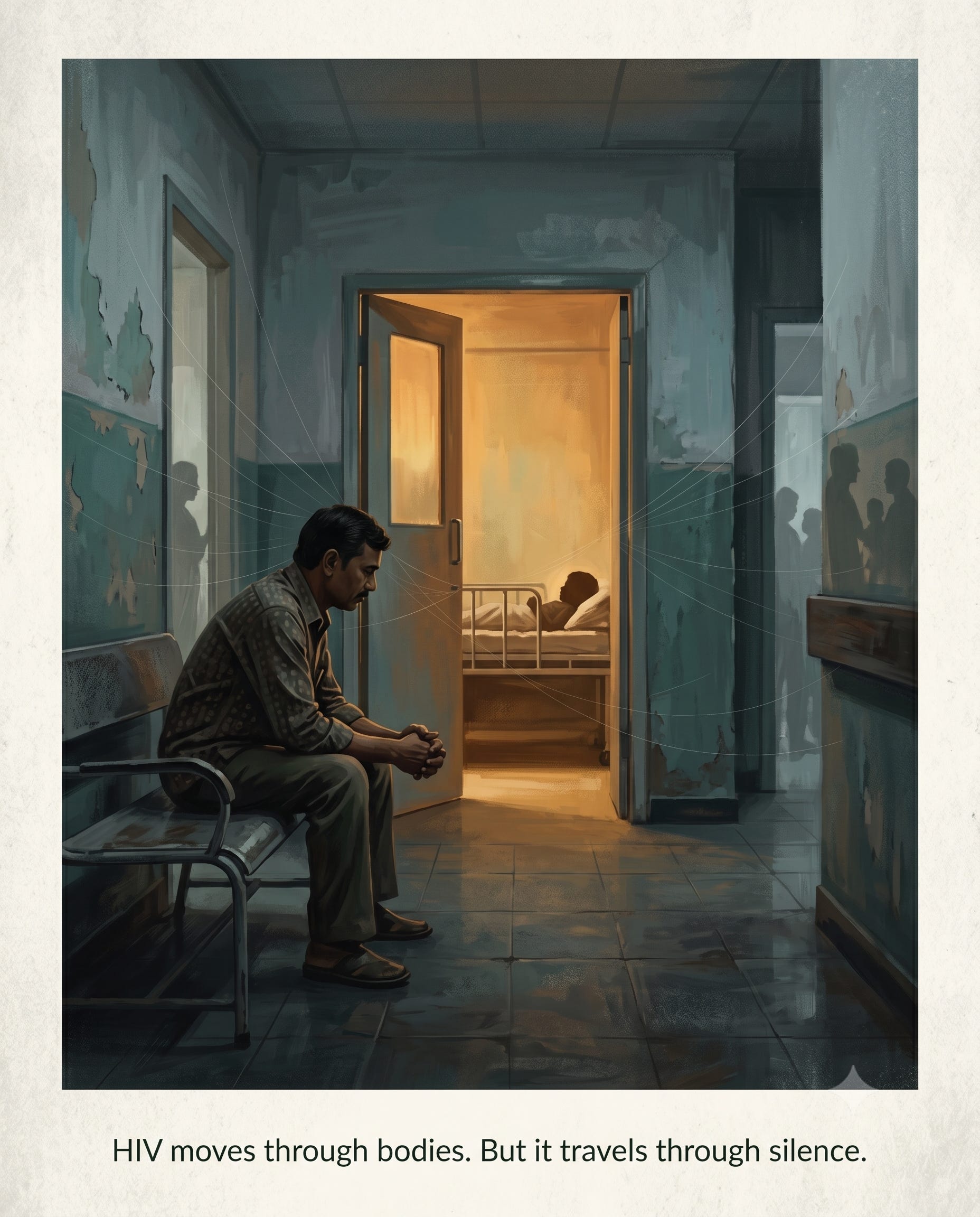
The uncle’s questions—“Does it spread by kissing?”—were never purely virological. They probed the foundations of his intimate life: trust, betrayal, identity. History-taking here transcended symptoms; it became an act of gentle excavation, revealing layers no imaging study could show. Clinicians stood at the edge of a story that could fracture families, yet withholding support risked further harm…!
Such cases illustrate how stigma drives information underground, turning silence into a vector…! Cultural norms that prioritize family harmony or male authority can complicate disclosure. Gender dynamics often heighten risks for women—fear of violence or economic ruin. These are not abstract sociology; they are daily clinical realities that demand cultural humility alongside scientific precision.
The Ethical Tightrope: Balancing Four Principles in Real Time
This is where medicine transcends biology. The basic four pillars of medical ethics—autonomy, beneficence, non-maleficence, and justice—become living tensions.
Autonomy grants individuals control over their bodies and information. Yet the biological parents’ choice to withhold their status curtailed the new partners’ autonomy—the right to informed decisions about their health and relationships. Autonomy carries shadow responsibilities.
Confidentiality builds trust essential for testing and care. Without it, people avoid care. But it is not absolute. When there is clear, foreseeable risk to identifiable others, the duty to protect shifts the balance.
Beneficence and non-maleficence require active good and harm avoidance. This means supporting voluntary disclosure through counseling, not coercion. It involves offering ART for the index patient’s health and prevention (TasP), screening for intimate partner violence before any notification, and linking everyone to care without blame.
Justice insists on equitable access—to testing, treatment, counseling—for all affected, regardless of the tangled paths of transmission.
Truth-telling emerges as both simple and profound. Accurate information about transmission routes, U=U, and modern outcomes must be “delivered with empathy” spacious enough to hold betrayal, fear, and hope simultaneously.
India’s Legal Framework: Safeguarded Partner Notification
India’s HIV and AIDS (Prevention and Control) Act, 2017 provides a rights-based scaffold. Section 9 carefully regulates disclosure to partners:
Only a physician or counselor (not any healthcare worker) may disclose.
Strict conditions apply: significant risk to the partner, counseling of the index patient who is still unlikely to disclose, prior notification of intent to the index patient, and in-person counseling of the partner.
Crucial safeguard: Disclosure is prohibited if it risks violence, abandonment, or severe harm—especially relevant for women.
The Act imposes a general duty on PLHIV (post-counseling) to take reasonable precautions against transmission, which can include disclosure or risk reduction (condoms, ART leading to U=U). There are strong confidentiality protections with limited exceptions, and anti-discrimination measures. NACO guidelines emphasize voluntary processes first, supported notification, and multidisciplinary involvement.
In practice, clinicians prioritize counseling toward voluntary disclosure, document efforts, assess risks, and involve public health teams when needed—all while protecting privacy within legal bounds. This framework attempts to thread the needle: prevent harm without destroying trust.
Toward Healing: Beyond the Diagnosis
The child in these stories receives ART. The adults—uncle, mother, biological father, chachi—need testing, counseling, and linkage to care. With TasP and U=U, futures can look different: healthy lives, informed relationships, reduced transmission. Stigma withers best in the light of accurate information and compassionate support.
Yet challenges persist. Viral load testing access varies. Adherence requires systemic support. Cultural conversations around sexual health remain sensitive. Broader prevention—PrEP for those at risk, education, destigmatization—must complement treatment.
For clinicians, these cases are profound teachers. They remind us that the chart records measurable facts, but ethics and empathy navigate the meaningful story. Thorough, non-judgmental history-taking is diagnostic. Cultural humility prevents reflexive moralizing. Supported disclosure pathways honor both privacy and protection. And science—TasP, U=U—offers tools to replace fear with agency.
Medicine has always grappled with bodies embedded in networks of relationships. A single pediatric HIV diagnosis can redraw family maps, exposing borders of silence and care. In the aftermath, we are left not with tidy resolutions but with better questions: How do we build systems that encourage truth without punishment? How do we translate viral suppression into social liberation? How do we treat not just the virus, but the conditions—stigma, inequality, fear—that sustain its hidden spread?
The dimly-lit ward, the frightened uncle asking about kissing, the child stabilized on treatment—these moments distill the essence of healing. The body is never a closed system. It is a node in a living web. The physician who forgets this treats only half the diagnosis. The one who embraces it—science, story, ethics, law—helps heal the whole.
Disclaimer: This is a de-identified, reflective narrative for educational purposes. Clinical practice, disclosure, and partner notification must strictly follow current NACO guidelines, the HIV Act 2017, institutional protocols, and applicable laws. U=U and early ART have transformed HIV—access, adherence, and stigma reduction remain vital. Consult official sources and ethics committees for specific cases.